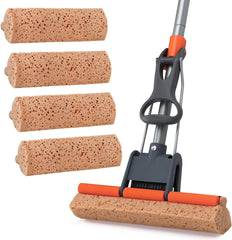
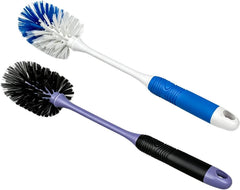
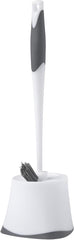
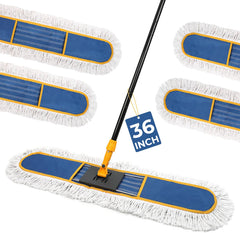
Sponges
Sponges looks like a style decision and turns out to be a specification decision. Cleaning tools are consumables with a specification, and the microfibre weight or abrasive grade decides whether the tool cleans or scratches.
Squeegees need a straight, sharp rubber blade; a hardened blade streaks instead of pulling water. A mop head's absorbency is set by fiber blend, with microfibre flat mops drying floors faster than string mops. Microfibre is measured in grams per square meter, with 250 to 300 for general wiping and 350 and up for glass and polish. Match the abrasive grade to the surface: anything labelled heavy duty will dull a coated cooktop or a matte finish. Choose microfibre for glass and stainless, and cotton for absorbing spills, since the two do different jobs.
Wash microfibre without softener, replace sponges when they smell regardless of appearance, and rinse a squeegee blade and dry it edge-up. For sponges, the details that matter most are the ones in the spec table rather than the headline copy.